
When to Replace Your Roof in Pennsylvania: 2026 Homeowner Guide

A roof that looks worn doesn’t always need replacing, but a small leak shouldn’t be ignored. If you’re searching “when to replace your roof Pennsylvania,” the answer depends on more than one shingle or a single storm. The roof’s overall condition, its leak history, and the weather it has faced all matter. It’s reasonable to worry about replacing it too soon or waiting until water damage spreads.
Pennsylvania’s snow, ice dams, summer heat, storms, and repeated freeze-thaw cycles can stress roofing materials. This guide covers warning signs, the effect of local weather, and how to weigh repair against replacement. For homeowners in Bucks and Montgomery Counties and the surrounding Lehigh Valley, LM Construction provides residential roofing and free estimates to help plan a roof replacement project.
Table of Contents
When to Replace Your Roof in Pennsylvania: Warning Signs
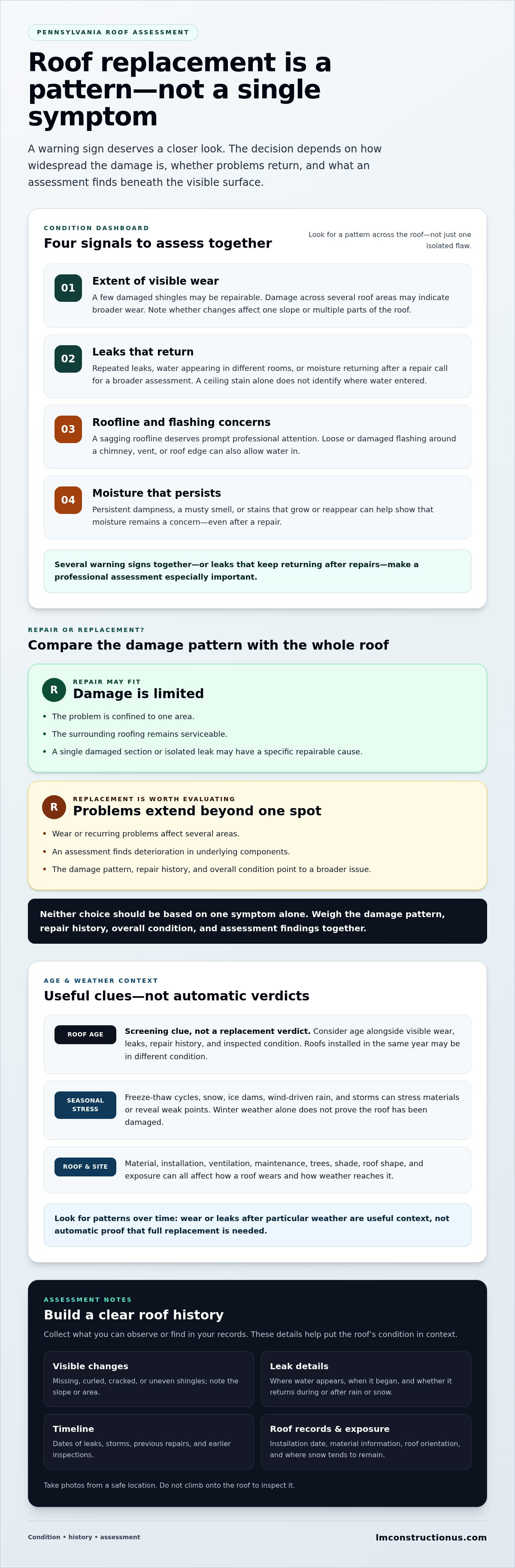
A warning sign is a reason to look more closely, not proof that the entire roof needs replacing. One damaged shingle or an isolated leak may be limited to a small area. To answer “when to replace your roof Pennsylvania” homeowners should look at the pattern: how widespread the damage is, whether problems return, and what an assessment finds beneath the visible surface.
Watch for recurring leaks, widespread shingle loss, a sagging roofline, or moisture concerns that persist after a repair. Each warrants attention. The types of roofing materials and their functions vary, but a roof is a system of connected parts, including the covering and the areas where it meets walls, chimneys, and other openings.
Which roof problems are visible from the ground?
From a safe spot on the ground, look for missing, curled, cracked, or uneven shingles. Treat these as observations to share, not a diagnosis. A few damaged shingles may be repairable, while damage across several roof areas may indicate broader wear. Note where the changes appear and whether they affect one slope or multiple parts of the roof.
A sagging roofline deserves prompt professional attention because the issue may involve more than the surface covering. Loose or damaged flashing around a chimney, vent, or roof edge can also allow water in. Don’t climb onto the roof to inspect it. A photo taken from a safe location can document what caught your attention.
When do leaks suggest more than a small repair?
A leak in one location may come from a specific opening or damaged section. Repeated leaks, water appearing in different rooms, or moisture returning after a repair call for a broader assessment. Water can travel after entering the roof, so an interior stain alone won’t show exactly where it got in.
Record where water appears, when you first noticed it, and whether it returns during or after rain or snow. Photograph ceiling or wall stains, and note dates of leaks, storms, and previous repairs. Persistent dampness, a musty smell, or stains that grow or reappear can help show that moisture remains a concern. Share those observations during the assessment instead of trying to trace the leak from the roof.
If several warning signs appear together or leaks keep returning after repairs, arrange a professional roof assessment to determine whether the damage is isolated or widespread. This can help distinguish a repairable problem from a roof that may be nearing replacement, without treating every visible flaw as a reason to replace the whole roof.
How Pennsylvania weather and roof age affect replacement timing
Roof age is useful context, but it can’t tell you by itself whether a roof needs replacing. Two roofs installed in the same year may be in different condition because of their materials, installation, ventilation, maintenance, and exposure. A roof with more wind exposure, shade, or standing snow may show wear differently from one with less exposure. When considering when to replace your roof, Pennsylvania weather and the roof’s observed condition both matter.
Does roof age alone mean replacement is due?
Age helps frame an inspection; it isn’t a replacement verdict. It can prompt a closer look, but it doesn’t reveal the condition of the roof’s layers or how well earlier work has held up. Check installation records, material paperwork, or previous inspection notes if you have them. These details can help a roofing professional compare the roof with manufacturer guidance for its specific material.
Roof age is a screening clue, not a replacement verdict. Avoid relying on one universal cutoff. Consider age alongside visible wear, leaks, repair history, and the roof’s inspected condition. A newer roof can have a problem that needs attention, while an older roof may not need immediate replacement if it remains in sound condition.
How do Pennsylvania seasons affect roof wear?
Pennsylvania’s freeze-thaw cycles repeatedly expose roofing materials and joints to changing conditions. Snow and ice may add stress, and ice dams can contribute to water backing up at roof edges. The effect varies by roof and exposure, so winter weather alone doesn’t prove a roof has been damaged. Look for patterns over time, including leaks or wear that appear after particular weather.
Wind-driven rain and seasonal storms can reveal weak points around roof edges, flashing, vents, and other openings. A roof may seem fine in ordinary rain, then show signs of water entry during a stronger storm. Record that change as useful information, not as automatic proof that full replacement is needed.
Homes across Bucks County, Montgomery County, and the surrounding Lehigh Valley experience weather differently. Nearby trees, roof shape, shade, and exposure affect how snow, wind, and rain reach a roof. Note which way the roof faces, where snow tends to remain, and whether water concerns follow storms. Share these observations during an assessment so the roof’s history can be considered alongside its age and material.
Gather any records you have before planning the next step. The installation date, material information, past repairs, and previous inspection notes can help clarify what guidance applies to your roof. LM Construction provides residential roofing and free roof estimates for homeowners in the area.
Roof repair or replacement in Pennsylvania: how to tell the difference
A repair may be appropriate when damage is limited to one area and the surrounding roofing remains serviceable. Replacement is worth evaluating when wear or recurring problems affect several areas, or an assessment finds deterioration in underlying components. Neither choice should be based on one symptom alone. To decide when to replace your roof, Pennsylvania homeowners should weigh the damage pattern, repair history, overall condition, and assessment findings together.
When may a roof repair be enough?
A small area of storm damage or a single leak may be repairable, particularly if the surrounding roof remains sound. But repair suitability depends on more than the visible spot. The condition beneath the damaged area matters, as does whether materials can be matched appropriately. An assessment can help establish whether the issue is truly localized or part of a wider pattern.
Repeated leaks call for a broader look. Another patch may address the visible symptom without explaining why water keeps entering. Share the location and timing of each leak, along with details of previous repairs, so the roof’s history is considered instead of treating each occurrence as unrelated.
What signs make full replacement worth evaluating?
Discuss replacement if damage spans multiple roof areas, leaks keep returning, or an inspection finds deteriorated components beneath the visible covering. These findings don’t automatically settle the decision. An inspection should establish how far the damage extends and whether the remaining roof can continue to serve its purpose.
Keep the roof’s physical condition separate from insurance or storm-damage questions. An insurer’s review concerns coverage and a claim; a roof assessment concerns the roof’s condition and the work it needs. A storm event alone doesn’t establish that full replacement is necessary. Compare the assessment findings with the repair history and the condition of the surrounding roofing before choosing a path.
How to assess your Pennsylvania roof and plan the next step
A brief record of what you know can make a roof assessment more useful. It connects the roof’s age and visible condition with the timing of leaks, storms, and past repairs. If you’re weighing when to replace your roof, Pennsylvania homeowners can start with these steps and then use an assessment to understand what the observations mean.
Record the roof’s age. Note the installation year if you know it. Gather material paperwork, past inspection notes, or repair records if they’re readily available. If the date is uncertain, write down your best estimate rather than treating it as exact.
List the symptoms. Record interior water marks, recurring leaks, damp areas, and concerns you can see from the ground. Note where each issue appears and whether it has returned.
Photograph visible concerns safely. Take pictures of roof areas you can see from the ground or another safe location. Don’t climb onto the roof or use an unsafe ladder for a closer view.
Arrange an assessment. Share your notes and photos so the roof’s condition can be considered alongside its age, weather exposure, and repair history.
What should homeowners document before an inspection?
Be specific about leak locations, the dates you noticed them, and any storms that came before the water appeared. Include dates and details of previous repairs when available. Note whether an interior stain is new, has grown, or has reappeared. These observations provide a helpful timeline, though they can’t identify the exact entry point on their own.
Include visible exterior concerns in your notes, but photograph them only from safe places. Keep the records together, such as in a phone note or folder, so you can share them during the assessment.
Is there a best season for roof replacement in Pennsylvania?
There isn’t one month that suits every roof project. Suitable scheduling depends on the weather, roofing materials, and project conditions. Rain, snow, ice, wind, and temperatures can affect when work can safely proceed, while the roof’s condition helps determine how soon it should be evaluated.
Don’t assume a concerning roof can wait simply because the season seems inconvenient. The condition of urgent damage, not the calendar alone, should guide when it is assessed. An assessment can clarify the next step, and scheduling can account for the work involved and suitable weather conditions.
LM Construction provides residential roofing and free estimates for roof replacement projects in Bucks County, Montgomery County, and the surrounding Lehigh Valley. Request a roof replacement estimate to discuss your observations and plan a practical next step.
Getting a local roof replacement assessment in Bucks County and nearby areas
To decide when to replace your roof, Pennsylvania homeowners should consider age, visible condition, leak history, and exposure to local weather together. No single detail tells the whole story. An older roof with no known leaks raises different questions from a newer roof with repeated water entry or damage across several areas. The goal of an assessment is to understand what the roof needs, not to assume replacement is the only answer.
For homeowners in Quakertown, Bucks County, Montgomery County, and the surrounding Lehigh Valley, a local assessment can put those observations in context. Share what you’ve noticed, when the symptoms began, and whether the roof has been repaired before. Clear information helps focus the discussion on the roof’s condition and a sensible project scope.
What can a local roof assessment clarify?
An assessment can help distinguish an isolated problem from broader deterioration. A leak in one area may have a different explanation from leaks that return or appear in several places. Visible wear should also be considered alongside the roof’s age and history. Discussing these details can help clarify whether repair or replacement merits consideration.
Bring your notes, photos taken from safe locations, and any installation or repair records you have. You don’t need to diagnose the roof yourself. Describe what you’ve observed and ask for a clear explanation of the findings and the work being considered. A useful discussion should leave you with a better understanding of the issue and the scope of a possible project.
What is a sensible next step if replacement seems likely?
Organize the information you’ve gathered before discussing the project: roof age, leak locations, dates of storms or water entry, visible concerns, and previous repairs. This record can keep the conversation specific. If an estimate points toward replacement, use it to understand the proposed scope and how it relates to the roof’s condition before making a commitment.
LM Construction is based in Quakertown and provides residential roofing for homeowners in Bucks and Montgomery Counties and the surrounding Lehigh Valley. Free estimates are available to discuss roof replacement projects. An estimate conversation can help you review the project needs and consider a practical next step without assuming replacement is necessary before the roof has been assessed.
Take the Next Step With Confidence
You don’t have to settle the replacement question based on guesswork or wait until a concern becomes harder to manage. A clear conversation about your roof’s condition can help turn uncertainty into a practical plan, whether that means addressing a specific concern or considering a larger project. If you’re weighing when to replace your roof, focus on getting a grounded assessment before making a decision.
LM Construction offers free roofing estimates for homeowners in its local Pennsylvania service area. Bring your observations and questions to understand what your roof may need and what a possible replacement project could involve.
Request a free roofing estimate from LM Construction. An informed next step can help you plan work that fits your home’s needs.
Frequently Asked Questions
How do I know if my roof needs to be replaced?
A roof may need replacement when an assessment finds deterioration across multiple areas or problems that can’t be addressed with a limited repair. Look beyond one symptom and consider how the roof performs as a whole, including whether its condition is affecting rooms beneath it. The question of when to replace your roof Pennsylvania homeowners ask can’t be settled by age or appearance alone. A professional assessment helps connect the signs you’ve noticed with the work the roof needs.
How long does a roof last in Pennsylvania?
There isn’t one reliable lifespan that applies to every Pennsylvania roof. Expected service life depends on the roofing material, installation, ventilation, maintenance, and weather exposure. Use the manufacturer’s guidance for the specific material as a reference, then compare it with the roof’s actual condition. If you don’t know the installation date or product type, old invoices, home records, or prior inspection notes may help fill in the picture.
Can a roof be repaired instead of replaced?
Yes, repair may be appropriate if damage is confined to a limited area and the surrounding roof remains in serviceable condition. For example, a problem near one roof opening may not require replacing unaffected sections. Suitability also depends on the condition beneath the visible damage and whether appropriate matching materials are available. If similar problems return or appear elsewhere, reassess the whole roof rather than treating each repair as a separate issue.
Does a small roof leak mean I need a new roof?
No, a small leak doesn’t automatically mean the roof needs full replacement. Water may enter through a localized problem, though the ceiling stain may not be directly below the entry point. Note when the leak occurs, which room is affected, and whether the mark changes after rain. If water returns after a repair or appears in another area, share that history during an assessment so the cause and scope can be considered.
Is winter a bad time to replace a roof in Pennsylvania?
Winter isn’t automatically a bad time, but cold, snow, ice, and changing conditions can affect whether roofing work is suitable on a particular day. The material and project conditions matter, so there isn’t one answer for every home. If you’re planning ahead, discuss the roof’s condition and likely scope before choosing a schedule. If damage raises concern, don’t rely on the season alone to decide whether an assessment can wait.
What happens if I wait to replace a damaged roof?
Waiting on damage that allows water inside can give moisture more time to affect ceilings, wall finishes, insulation, or other building materials. The extent depends on where water is entering and how long the area stays wet. A discolored patch that grows, soft interior surfaces, or recurring dampness are reasons to take the concern seriously. An assessment can help clarify the risk of delay and whether a limited repair or broader work is needed.
Should I replace my roof before selling my Pennsylvania home?
Not necessarily. First understand the roof’s condition and whether repair, replacement, or clear records of its state are the practical choice for your sale. A recent inspection or organized repair documentation can help you discuss the roof accurately with prospective buyers. If replacement appears likely, consider the project scope and your selling plans before committing. The right decision depends on the roof itself, not simply on the fact that you’re preparing to sell.



Comments