
Deck Improvements That Add Durability and Everyday Value

What if the most valuable deck improvements are the ones you barely notice at first? Fresh boards and new railings can sharpen a deck’s appearance, but they won’t solve loose framing or water that keeps soaking into the structure. If your deck looks worn, it’s reasonable to wonder whether you’re seeing a surface issue or a sign that something underneath needs attention.
That’s why the best place to start is with the deck’s condition, not its cosmetics. Address water management and structural concerns first, then consider upgrades for safety, comfort, and appearance. This sequence helps focus your budget on what matters and avoids dressing up problems that still need attention.
This guide explains how to assess common trouble spots and compare practical improvements, from stronger railings and better lighting to material choices and features for everyday use. You’ll learn what each upgrade can help with, where trade-offs matter, and how to plan a durable, comfortable deck in a sensible sequence.
Table of Contents
Deck Improvements: How to Spot What Your Deck Needs First
Improving an existing deck and planning a complete rebuild are different projects. A deck with sound framing may need focused work on worn boards, stairs, or railings. If the supporting structure or its connection to the house is compromised, surface upgrades alone won’t address the underlying concern. Start by observing the whole deck before choosing a scope.
Rain, humidity, and seasonal temperature changes in Pennsylvania expose decks to repeated wetting, drying, and movement. Water that lingers on surfaces or collects near the house can contribute to deterioration over time. The Deck (building) overview describes typical structures and materials and can help orient your inspection.
Which signs suggest a deck improvement is overdue?
Look for splintering, loose or uneven boards, recurring finish failure, and noticeable movement underfoot. These observations don’t identify the cause on their own, but they can show where closer attention may be needed. Soft, visibly damaged, or persistently damp areas deserve particular care, especially when the same spot keeps showing trouble after maintenance.
Keep a simple record: note where a problem appears, when you first noticed it, and whether it changes after wet weather or through the seasons. Photos taken from the same position can make gradual changes easier to spot. If an area feels unstable, don’t test it by placing extra weight on it.
Surface wear affects the visible finish; softness, persistent dampness, or movement can point to concerns that deserve a closer structural assessment.
What should homeowners inspect before choosing upgrades?
Begin with the walking surface. Scan for damaged, lifted, or uneven boards and places where water remains. Check stairs for loose treads or shifting, and look over railings and their connections for movement or visible damage. From a safe position, note visible framing concerns, such as areas that appear damaged or stay damp.
Pay attention to the ledger board, where an attached deck meets the house, and to other visible connections. Look for signs of water exposure or movement around these points, but don’t assume a visual clue reveals the full condition. Observe whether water runs away from the deck or gathers beneath it or near the house.
A visual check helps you describe what you see and identify questions the project needs to answer. It can’t reveal every hidden condition or replace an appropriate professional assessment. A sound evaluation helps determine whether targeted deck improvements make sense or broader reconstruction should be considered.
How Water Management and Sound Framing Protect Deck Improvements
New boards and fresh finishes can improve a deck’s appearance, but they won’t prevent water from reaching vulnerable framing or the connection to the house. Durable work starts by considering where rain flows, where moisture may linger, and whether the supporting structure is sound. The ledger board attaches a deck to the home, so its condition and connection matter to the whole project.
Water management belongs in a durable deck plan because drainage, airflow, and sound connections help limit persistent moisture exposure across the boards, framing, and house attachment.
Why drainage and airflow matter for a deck
Rain and humidity are part of life in southeastern Pennsylvania, where seasonal changes bring repeated wet and dry conditions. If water collects on the surface or stays trapped beneath the deck, boards and framing may remain damp longer. Debris can block gaps between boards, and poor drainage can direct runoff toward the house instead of away from it.
Keep the deck clear enough for water to move through its intended drainage paths. Remove leaves and other debris from gaps and areas where water gathers. Maintain existing finishes as appropriate for the deck’s material and condition. Airflow beneath and around the structure also helps damp areas dry, so dense storage or plant growth can restrict circulation. These steps don’t prevent every kind of deterioration, but they can reduce avoidable moisture exposure.
When to look beyond deck boards and railings
Replacing worn surface boards addresses the walking surface. It won’t correct deteriorated framing, ongoing movement, or a concerning connection where the deck meets the home. If a deck shifts underfoot, visible framing appears damaged, or the ledger area shows signs of persistent moisture, treat those observations as reasons to look more closely, not as a diagnosis.
Before choosing finishes or surface materials, consider whether the structure can support the planned work and whether water is being directed away from vulnerable areas. A visual check can help identify where concerns appear, but it can’t establish the condition of hidden framing or determine structural safety from a photo. An appropriate professional assessment can clarify the scope before new deck improvements are built over unresolved issues.
Planning around drainage, framing, and the house connection helps align improvements with the deck’s actual condition. LM Construction provides deck building and manages projects from design through completion. Learn more about LM Construction’s deck building.
Deck Improvements That Solve Problems Versus Those That Change Appearance
A worn-looking deck doesn’t automatically need a full rebuild, and new boards don’t automatically solve what’s happening underneath. The right scope depends on what needs attention: routine upkeep, a localized defect, a tired surface, or widespread concerns that call for broader work. Separating those goals helps you choose deck improvements that respond to the deck’s condition, not just its appearance.
Observed need | Improvement category to consider
Finish looks worn, but surfaces appear sound | Maintenance suited to the deck’s material and condition.
Damage appears limited to a specific board, stair, or railing part | Targeted repair, after considering the surrounding structure.
Surface boards are worn, and the supporting structure is suitable | Resurfacing, which renews the visible surface without correcting hidden issues.
Deterioration is widespread, repairs keep recurring, or the layout no longer works | Assess broader reconstruction or a redesigned deck project.
These are starting points, not guaranteed fixes. Similar visible wear can have different causes, so the deck’s structure and site conditions should guide the final scope.
When can repairs or resurfacing make sense?
Focused repairs may suit isolated surface damage when the surrounding deck is in appropriate condition. Resurfacing can renew worn boards and other visible elements, but it doesn’t replace or repair hidden framing or the deck-to-house connection. It makes sense only when the existing structure is suitable for the work. If the underlying condition is uncertain, assess it before covering it with a new surface.
When might a larger deck project be the better path?
Widespread deterioration, repeated repairs in different areas, or a layout that no longer supports how you use the space can be reasons to consider broader work. They aren’t automatic proof that a full rebuild is needed. The scope should reflect the deck’s condition, your goals, and the site, with construction decisions grounded in assessment rather than appearance alone.
Think of maintenance as caring for sound components, targeted repair as addressing a limited problem, resurfacing as renewing the visible layer of a suitable structure, and reconstruction as reconsidering more of the deck. That distinction helps keep the project focused. A fresh surface changes how the deck looks, but durable results depend on matching the work to what the deck needs.
How to Prioritize Deck Improvements for Comfort and Durability
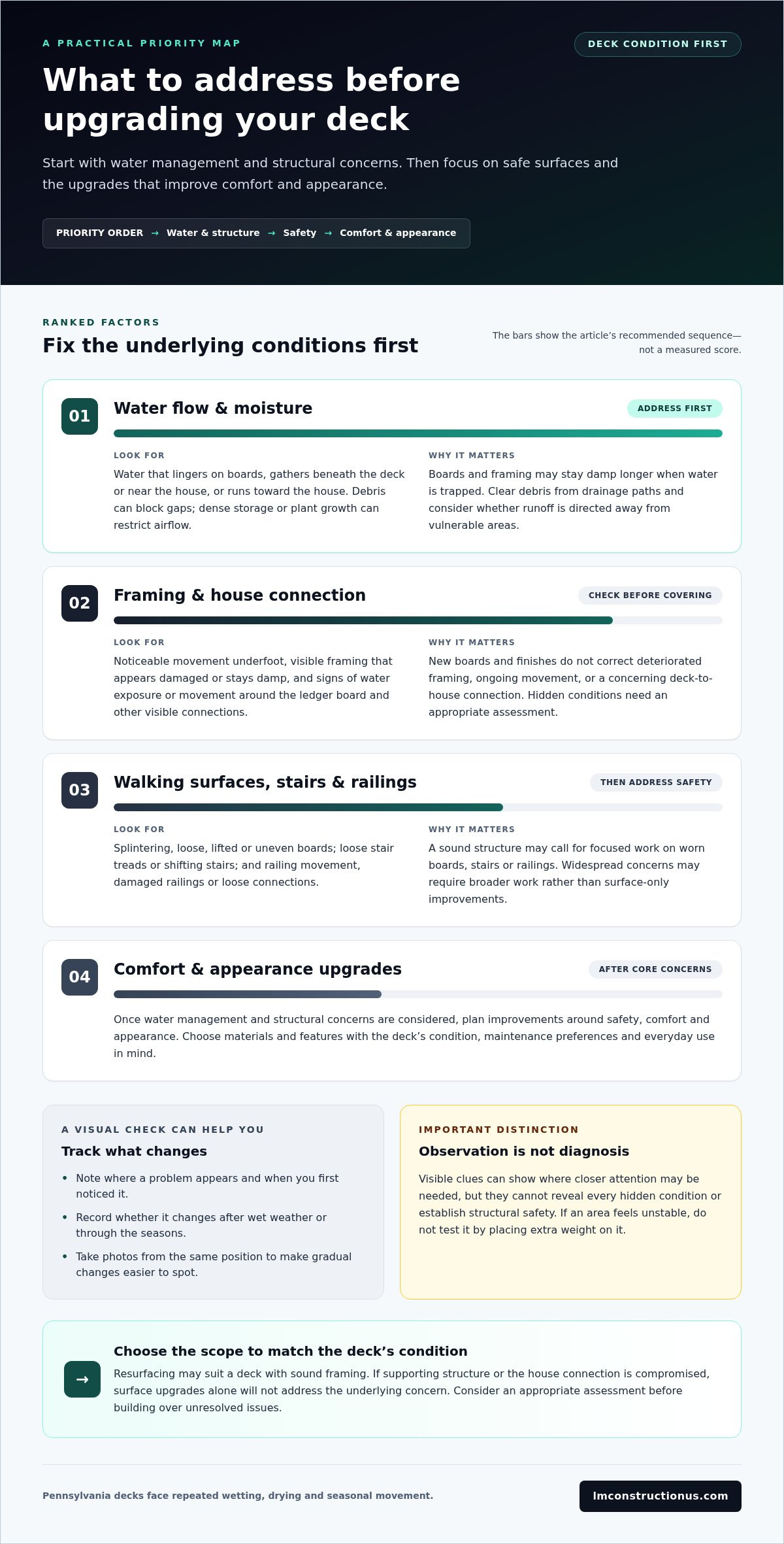
A useful project sequence puts the deck’s condition ahead of its finishes. First, assess the structure and note areas that need attention. Next, address water flow and any framing or connection concerns. Once those fundamentals are accounted for, plan surface materials and features around how your household uses the space. This order keeps comfort upgrades from distracting from work that supports the deck itself.
Which deck features improve everyday use?
Start with your routines. Do people mainly pass through the deck, sit and read, share meals, or gather with guests? Clear answers help shape the layout. A dining area needs room for chairs to move, while a seating zone should leave an easy path between the house, stairs, and other parts of the deck.
Stairs and railings should fit the way people enter, leave, and move around the space. Seating can make a broad deck more useful, while lighting can help people see the route around steps and gathering areas after dusk. Treat these as planning choices, not automatic fixes. Placement depends on the deck, the household, and the intended use.
How should materials and maintenance needs shape the plan?
Wood and composite decking involve different considerations. Wood has a natural appearance and may suit homeowners who are comfortable with regular care, including maintaining its finish. Composite decking can appeal to those who prefer less routine surface maintenance, though it may look and feel different from wood. Neither choice is right for every project.
Consider the existing structure, the look you want, and the upkeep you’re willing to handle. Material selection should also fit the project’s design and site conditions. A surface material won’t correct underlying framing or drainage concerns, so settle those questions before choosing boards.
Assess: Record the deck’s condition and intended use.
Address: Plan for water management and structural concerns.
Design: Choose surfaces, access, seating, and lighting that fit daily routines.
This sequence gives you a practical way to weigh deck improvements without treating appearance as the only measure of value. LM Construction plans and builds residential decks. Explore deck-building projects with LM Construction.
Planning Deck Improvements with a Local Construction Partner
A clear plan ties your priorities to the deck’s condition and the space around it. It helps determine which work belongs together, what should happen first, and how materials and layout can support everyday use. In Quakertown, Bucks and Montgomery Counties, and the surrounding Lehigh Valley, rain, humidity, and seasonal changes make drainage and durable detailing practical topics to address during planning, before new surfaces are in place.
What does a clear deck project plan cover?
Start with what you want the deck to do. Note how you use it now, what feels inconvenient, and whether you’re planning for meals, seating, easier movement, or gatherings. Pair those goals with visible concerns and the site’s conditions. A plan can then connect the layout, improvement priorities, materials, and work sequence to the home’s outdoor space.
For example, a dining setup needs room for people to move around chairs, while a seating area may call for a different arrangement. Existing stairs, entry points, drainage, and nearby features all affect how the space works. Material choices should fit your design goals and maintenance preferences, as well as the deck’s condition. A well-defined scope keeps the project grounded in the home rather than in a list of upgrades chosen in isolation.
How LM Construction can help with deck projects
LM Construction provides residential deck building and manages projects from design through completion. Coordinated planning connects your intended use with site conditions, material choices, and the work sequence. This keeps priorities clear, whether the project focuses on a new layout or improvements to an existing outdoor space.
Based in Quakertown, LM Construction serves homeowners across Bucks and Montgomery Counties and the surrounding Lehigh Valley. Local weather exposure makes it useful to consider where water flows and how details are planned for the site. Project planning connects the scope to your home, goals, and deck conditions.
If you’re considering deck improvements, request a free estimate from LM Construction’s deck-building team to discuss your goals, the site, and your priorities.
Plan a Deck That Works Better for Your Home
The most useful deck improvements start with the deck’s actual condition. Address drainage and structural concerns before choosing new surfaces or comfort features, then shape the layout around how your household uses the space. This sequence balances durability, appearance, and everyday function without assuming every worn deck needs a complete rebuild.
A well-planned project also considers the home and site, from water flow to material choices and access. LM Construction provides residential deck-building services and manages projects from design through completion. Based in Quakertown, the company serves Bucks and Montgomery Counties and the surrounding Lehigh Valley.
Ready to discuss your project? Request a free estimate for your deck improvements from LM Construction. Share your goals and what you’ve noticed about the deck to start planning a more useful outdoor space.
Frequently Asked Questions
What are the best improvements to make to an old deck?
The best improvements address the deck’s condition first, then make it work better for your household. Check the walking surface, stairs, railings, visible framing, connections, and drainage. If water or structural concerns need attention, prioritize those before choosing new boards or features. Once the deck is in suitable condition, consider materials, seating, lighting, and layout based on how you use the space. The right deck improvements depend on the deck itself.
Can you resurface a deck without rebuilding its frame?
Yes, resurfacing can be an option if the existing frame and connections are suitable for the work. It replaces visible surface components, but it doesn’t repair hidden framing or a compromised connection to the house. Assess the frame before covering it with new boards. If there are signs of movement, damage, or persistent moisture, determine the underlying condition first rather than treating resurfacing as a fix for every concern.
How do I know if my deck needs repairs or a full rebuild?
A deck with a localized problem and otherwise suitable supporting structure may be a candidate for focused repairs. Widespread deterioration, recurring issues in several areas, movement, or a layout that no longer meets your needs may call for a broader assessment. These signs don’t prove that a rebuild is necessary. A visual check can help you record concerns, but it can’t establish the condition of hidden framing or confirm structural safety.
What deck improvements help protect against water damage?
Good drainage, clear gaps between boards, airflow beneath the deck, and appropriate surface maintenance can help limit lingering moisture. Keep leaves and debris from blocking drainage paths, and notice where runoff collects, especially near the house connection. These steps don’t prevent all deterioration, but they address common sources of persistent dampness. If moisture or damage appears around the ledger board or framing, consider an appropriate assessment before planning surface upgrades.
Is composite decking a better choice than wood for a deck?
Neither material is automatically better for every home. Wood offers a natural appearance and generally calls for regular care, such as maintaining its finish. Composite decking may suit homeowners who prefer less routine surface upkeep, but its look and feel differ from wood. Compare maintenance preferences, design goals, existing conditions, and project scope before deciding. The material should suit both the deck and your expectations for its ongoing care.
Can new deck boards fix loose or unstable railings?
No, replacing deck boards doesn’t by itself correct a loose or unstable railing. The railing and its connections need attention as a separate part of the deck. New boards may improve the walking surface, but they don’t resolve concerns with posts, fasteners, or supporting structure. Don’t treat a cosmetic update as proof that a railing is secure. Have the cause of movement assessed before deciding what work is appropriate.
Do deck improvements require a permit in Pennsylvania?
Some deck projects may require a permit, but requirements depend on the work and local rules for the property. Pennsylvania homeowners shouldn’t assume the same answer applies to every municipality or project. Before construction begins, check the requirements with the local municipality responsible for the property. Include that step in early planning, especially if the project changes the deck’s size, attachment, structure, or layout.


Comments